

Why Credit Unions Are a Valuable Resource for Agricultural Operations

Farming comes with unique financial challenges. From purchasing equipment to managing seasonal cash flow, agricultural operations require financial solutions tailored to their irregular income cycles, high upfront costs, and long-term planning needs. For many farmers, working with a credit union can provide critical tools and support to build and sustain their operations. Below, we’ll explore why credit unions are uniquely positioned to help agricultural businesses thrive.
The Credit Union Advantage
Unlike traditional banks, credit unions are member-owned, not-for-profit financial institutions. This model allows them to prioritize their members’ needs over profit margins, offering a range of benefits that directly appeal to the agricultural community. Some key distinctions include personalized service, lower fees, better interest rates, and a strong sense of community.
1. Tailored Financial Products for Farmers
Credit unions often design products and services to meet the specialized financial needs of farmers. For example, they understand that a farmer’s income can vary widely depending on harvest yields, market prices, or even the weather. Many credit unions offer flexible loan repayment schedules structured around seasonal income cycles, which can alleviate stress during cash-strapped months.
Additionally, credit unions frequently provide loans for specialized agricultural equipment, farmland, and livestock purchases. These options come with competitive interest rates, often lower than those found at commercial banks.
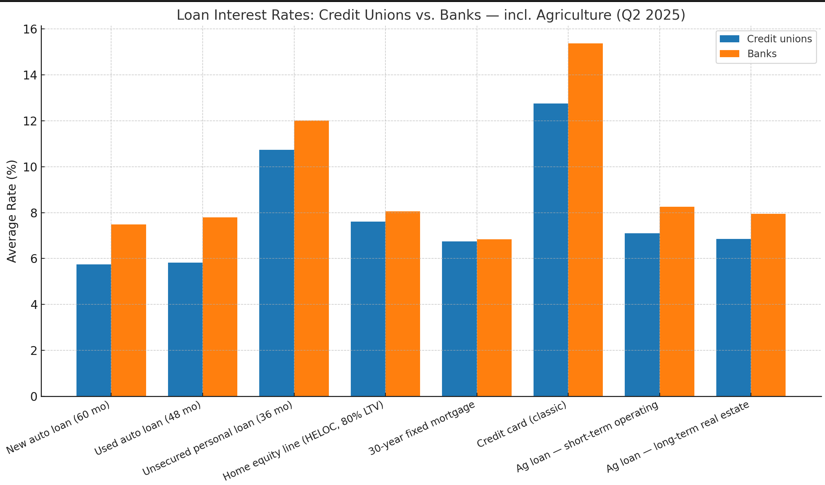
Source: NCUA “Credit Union and Bank Rates 2025 Q2,” data as of June 27, 2025 (extracted July 8, 2025)
2. Lower Costs Help Tight Margins
Farming often operates on thin profit margins, making cost savings a top priority. Credit unions typically charge lower fees on services like checking accounts, loans, and overdrafts. They also tend to require smaller down payments for loans and offer more reasonable interest rates on credit.
For example, while banks are focused on maximizing shareholder returns, credit unions operate to serve their members. Any surplus earnings are reinvested in the form of better interest rates, reduced fees, or enhanced member programs. This translates into tangible financial relief for farmers.
3. Personalized, Localized Service
Credit unions are inherently community-focused. Their smaller size compared to national banks allows credit union representatives to build personal relationships with members. For agricultural operations, this means farmers can work directly with a financial advisor familiar with the nuances of their local economy and farming challenges.
This localized approach often results in more empathetic lending decisions. Credit unions may consider factors beyond a farmer’s credit score, such as farming history and future earnings potential, making it easier to access credit when needed.
Placeholder for a photo of a farmer meeting one-on-one with a credit union representative.
4. Support in Navigating Financial Challenges
Agriculture is inherently risky—droughts, floods, market fluctuations, and unexpected equipment breakdowns can derail even the most prepared farmer. Credit unions often step up during such challenges by offering financial counseling or custom solutions to help farmers weather tough times.
For example, many credit unions have programs to temporarily reduce or defer loan payments during periods of hardship. Their members-first philosophy enables them to focus on creating long-term solutions that prioritize sustainability over immediate profit gains.
5. Profit Stays in the Community
One of the biggest advantages of working with a credit union is that their profits remain within the community. For farmers, this means that every dollar spent at a credit union strengthens the local economy, from schools and small businesses to other agricultural operations.
On the other hand, large banks often funnel profits to distant corporate headquarters and shareholders. Supporting a credit union aligns with the values of many farmers who understand the importance of reinvesting in their communities to create a stronger, more resilient local economy.
6. Financial Education and Resources
Credit unions are also committed to educating their members. Many offer workshops, webinars, and resources covering topics like financial planning, budgeting, and risk management. These programs are especially useful for newer farmers or those expanding their operations.
For example, a credit union might host a seminar on navigating the financing involved in purchasing new farm equipment or improving soil quality. Such resources not only boost financial know-how but also foster a sense of partnership between the credit union and the farming community.
7. Cooperative Model Reduces Financial Stress
The cooperative nature of credit unions means that every member is both a customer and an owner. This structure incentivizes transparency, fairness, and inclusivity—qualities that resonate deeply within agricultural communities. Farmers who choose credit unions are often joining a broader network of people with shared goals and challenges.
Because credit unions are member-focused, they evaluate success differently than for-profit banks. Their focus isn’t on selling costly financial products but on finding practical and sustainable solutions to meet their members’ needs.
Practical Considerations for Farmers Choosing a Credit Union
While the benefits of using a credit union in agricultural operations are substantial, farmers should still carefully evaluate their options. Here are some factors to keep in mind when selecting a credit union:
- Membership Requirements: Some credit unions require members to reside in a specific area, work in a specific industry, or belong to specific groups.
- Services Offered: Farmers should ensure the credit union offers services tailored to their unique needs, such as agricultural loans or flexible repayment plans.
- Reputation: Find out what other local farmers and community members have to say about their experiences with the credit union.
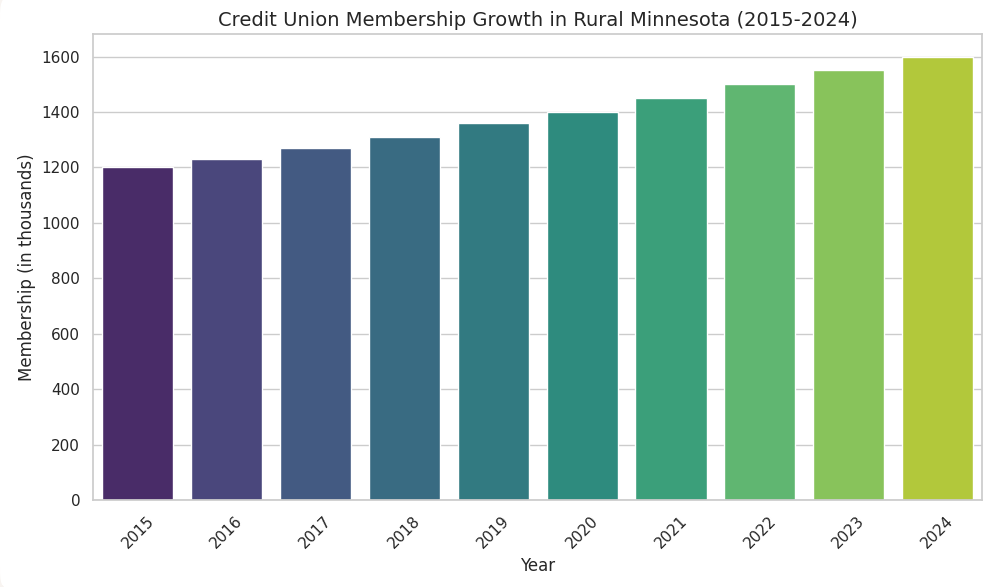
Sources:
- Minnesota Credit Union Network (MnCUN) – According to the National Credit Union Administration’s Quarterly U.S. Map Review, Minnesota ranked 8th nationally for year-over-year membership growth in early 2024, with over 2 million members statewide, including strong rural representation.
- America’s Credit Unions – Data & Statistics – Offers long-term historical data and performance trends across states, including Minnesota, which helps estimate rural membership growth over time.
- CUInsight Report – Highlights consistent growth in Minnesota credit union membership, with a goal to reach 50% of Minnesotans by 2030. As of 2021, membership had already reached 5%, with rural areas contributing significantly
Why Credit Unions Complement Farmers’ Values
At their core, credit unions share many of the same values that drive agricultural communities—self-reliance, mutual support, and sustainability. By utilizing credit unions, farmers can access vital resources while contributing to the health of their local economies.
Whether you’re looking for affordable financing, personalized service, or a financial partner invested in your long-term success, credit unions provide a compelling alternative to traditional banking. Their member-centric, community-first philosophy makes them especially well-suited to help agricultural operations not just survive, but thrive.
Placeholder for a closing photo, such as a farmer standing in a field with an advisor from their local credit union.
Farmers have a wide range of financial needs, but credit unions offer the unique ability to provide support rooted in community and sustainability. Exploring these kinds of partnerships could be the key to unlocking stability and growth in today’s unpredictable agricultural landscape.